Planary
A platform my classmates and I built because school projects don't teach you to actually ship.
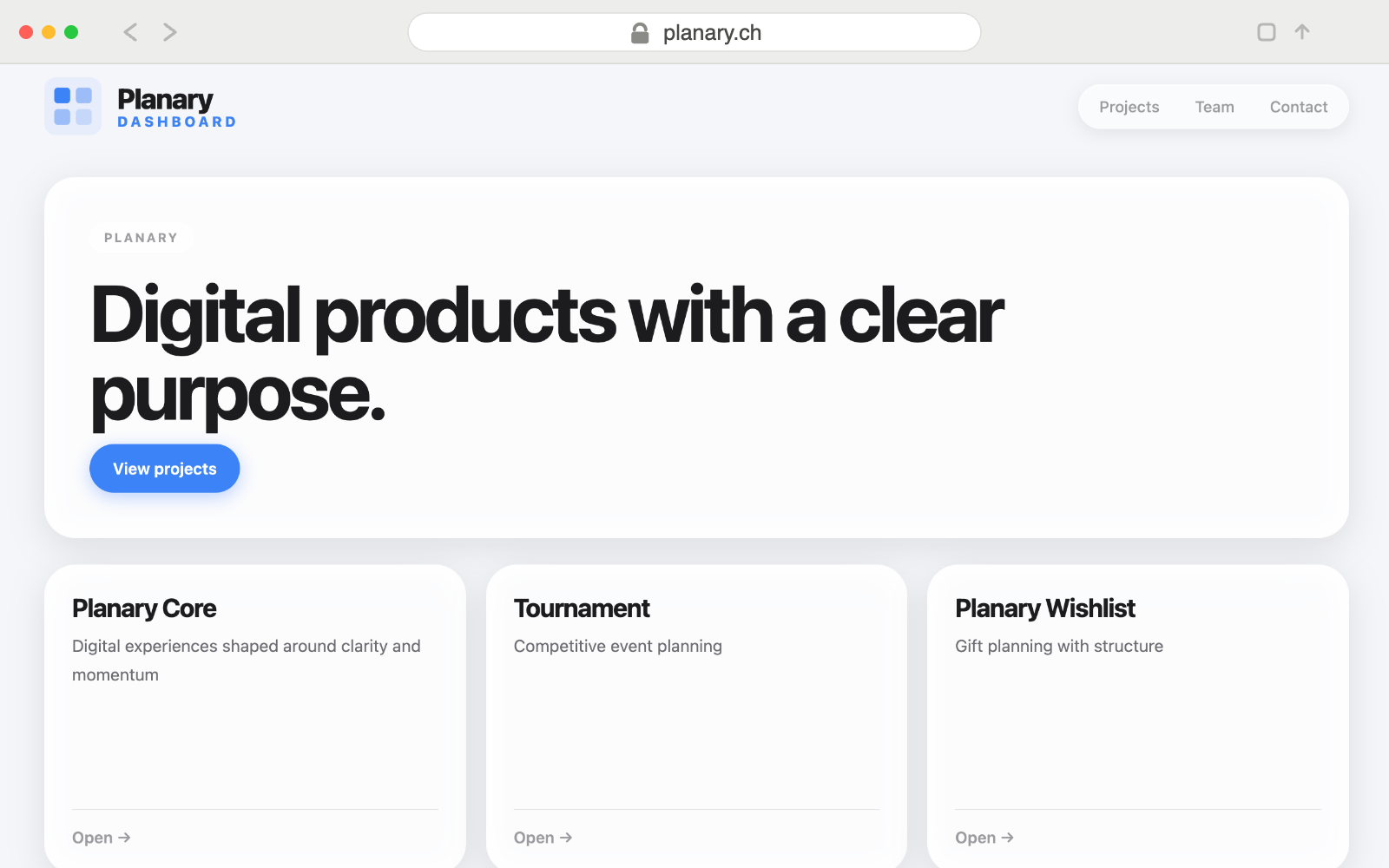
Planary started as an honest answer to a frustration: school projects let you coast. You write code, demo it once, and nobody is accountable for what happens next. We wanted to know what real shipping feels like — where users notice when it breaks. The answer was to build a platform, put it on a real domain, and use it ourselves.
School builds don't hold you accountable.
You can fake progress in a school project. Miss a sprint, catch up the night before the demo, collect the grade. Nothing actually has to run tomorrow — so most of it doesn't. We kept finishing projects that were technically complete but practically useless, software that existed only long enough to be assessed.
We wanted to break that pattern. The rule: everything goes on a real domain and real users — us — rely on it. If the auth service goes down, nobody logs in. That kind of pressure doesn't exist in a classroom. So we manufactured it.
One auth layer. Four real products.
Rather than a single app, we decided to build a platform: a shared identity layer that any sub-app could plug into, then stack real tools on top. Each sub-app had to solve a problem we actually had, so we'd be honest users ourselves and notice when something broke or annoyed us.
We chose Go for the backend — none of us had used it seriously before. That was intentional. Learning a new language under real delivery pressure is very different from learning it in tutorials, and we wanted the hard version.
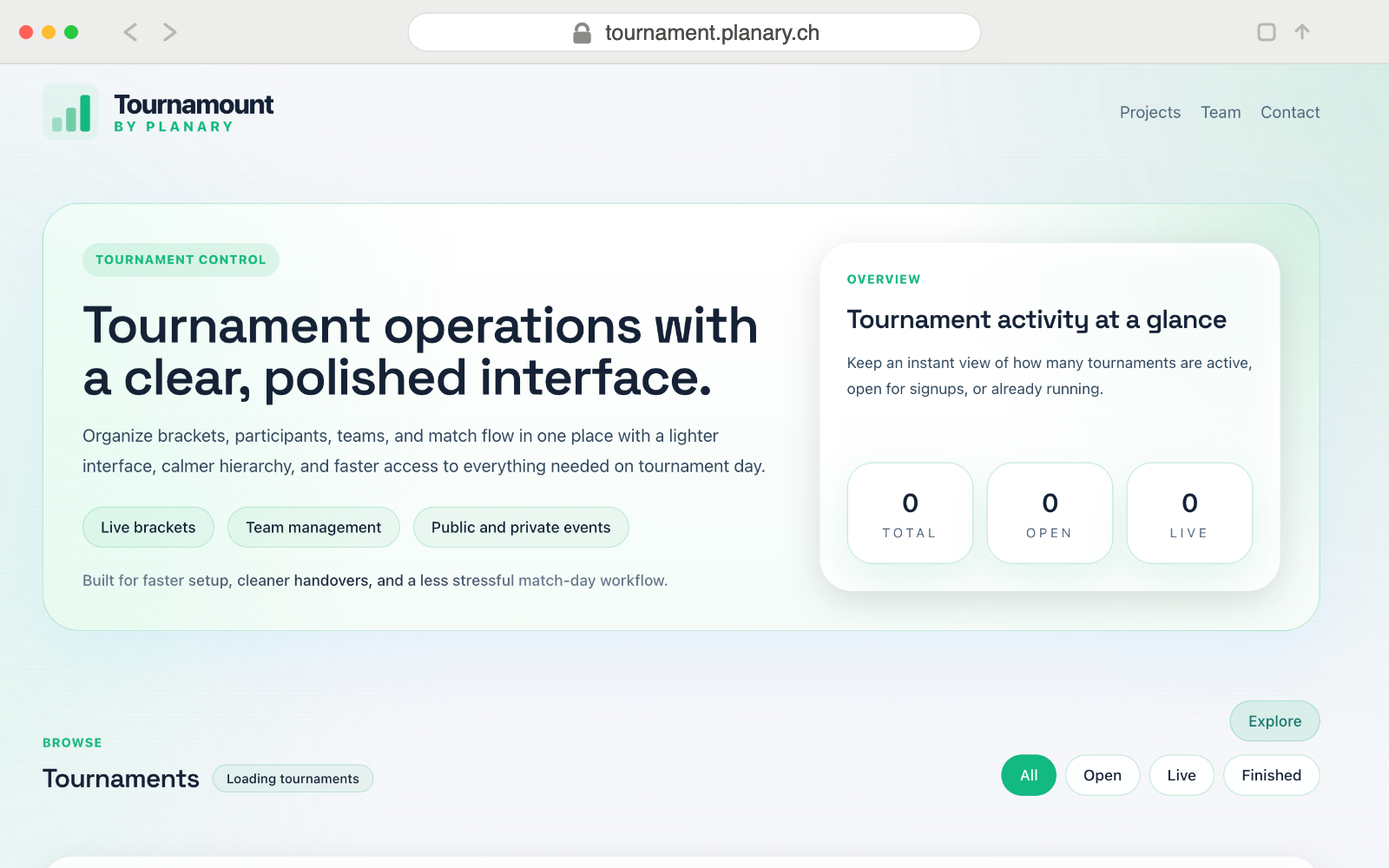
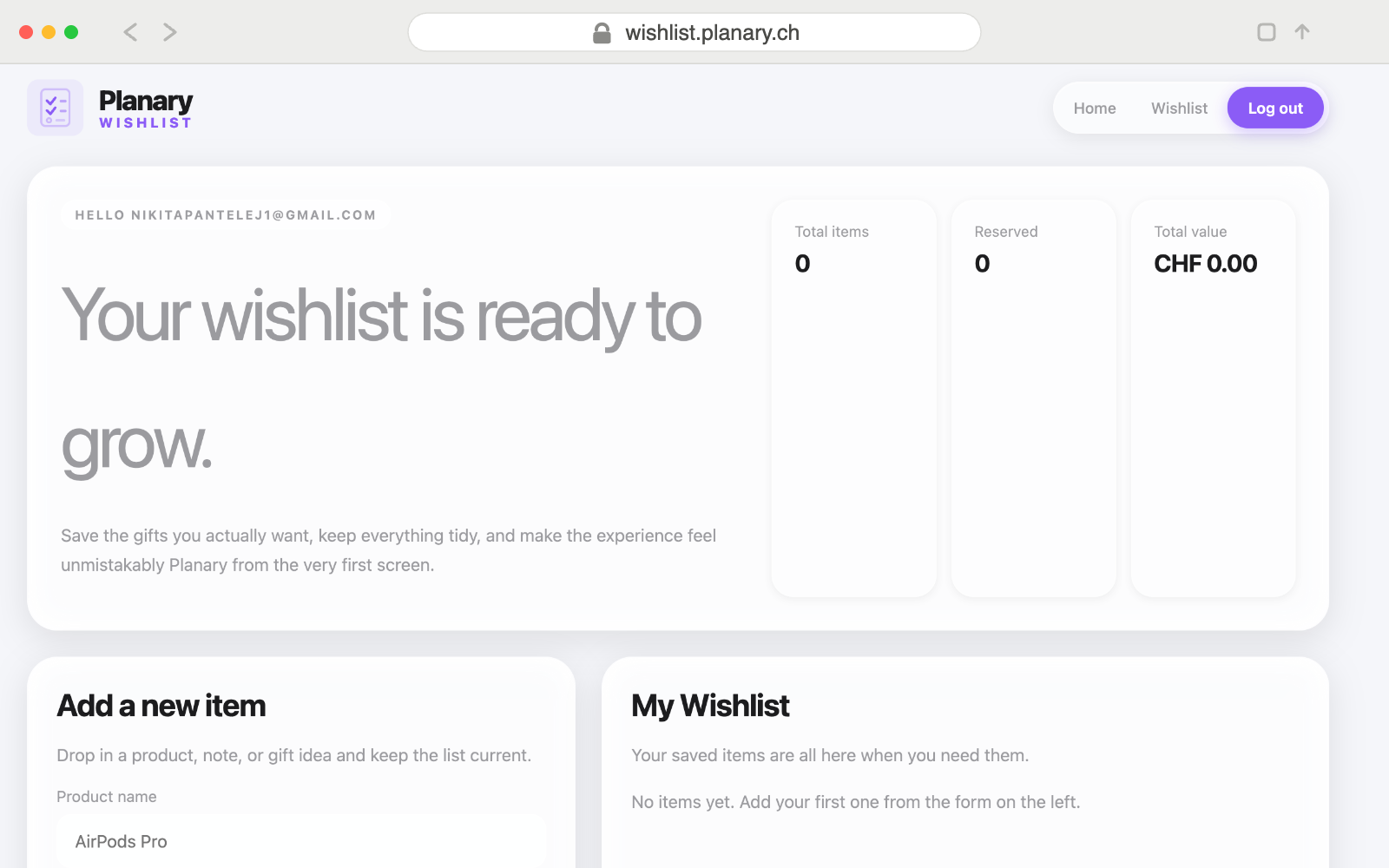
Four sub-apps, one sign-on.
Each sub-app is independently deployed but shares the same auth context. Log in once at auth.planary.ch and your session carries across all apps automatically.
Why these tools.
Every major decision was made deliberately, usually after trying the obvious thing first and finding it wanting.
The honest retrospective.
- Distributed auth has more edge cases than you expect. Concurrent refresh token requests, cross-subdomain cookie propagation, and logging out everywhere are each simple in isolation — together they multiply.
- Go's concurrency model changed how I think about concurrent code. Goroutines are cheap; the mental model of ownership via channels is cleaner and more explicit than I expected from a systems language.
- Team velocity is not linear. Three people communicating poorly ship slower than one person. We got much better at short async decisions and not blocking on full consensus for small choices.
- Ship the ugly version. The embarrassing build we had at week two was the most useful thing we made. Actually using it ourselves shaped everything that came after it — far more than any planning session did.